After many years of using Par EndFedz wire antennas for portable use, I decided to opt for a Buddipole a couple of years ago. If you've read the various articles online or you read the book and other files by B. Scott Anderson, NE1RD, you've already absorbed a lot of information. Did it enlighten you and help you get your antenna working great, or did you come away from it feeling a bit overwhelmed and wondering if you had done yourself right by spending that much money? I'm certainly no expert on the Buddipole. However, I have found what works for me. I thought I would share some tidbits with you.
A lot of the information can be quite confusing, even to experienced hams. The different bands perform differently at various heights, the chart is for set certain lengths of the arms, and other little nuances you discover as you read documentation and use the antenna. Having played with my Buddipole for a couple of years now, a few things are important to know, in my opinion. A few issues are that not everyone understands the dynamics of how antennas work, or how to make minute adjustments on a Buddipole that you just can't get set right. For a while, I must admit, I thought about giving up and using my LNR Precision Par EndFedz antennas. They are proven performers with great SWR and resistance once initially tuned up. But, I figured that since I had it, I might as well start using the Buddipole components I had accumulated. I don't have anything against using it as a regular dipole. With various angles and other factors, you can get interesting results, just like Scott mentions in his book. However, like a lot of people do, I ended up using the components as a vertical. It's simpler to put up, has good performance and in my opinion, it's quicker to deploy. I'm sure that some experienced Buddipole users might disagree with me. If experimentation and the idea of fiddling with components to see what will happen is your thing, this is definitely the antenna package to use.
A lot of people cannot adequately get a Buddipole high enough to do true DX. I've done DX with a wire dipole at 13 feet, but it was a full 1/2 wavelength. My EndFedz 40m/20m is a 1/2 wavelength on 40m and a full wavelength on 20m. Combined with my 31 foot telescoping mast, it gives good performance. But, there are a whole lot of situations where I can't put up the mast and then string out ~66 feet of wire. If you use the formula of 234/f for a quarter wavelength, that is still a fairly long antenna. High Q loading coils will allow you to achieve a good SWR in most cases. However, the resistance will usually be very low on a shortened antenna. As you get lower in frequency, the bandwidth decreases. A longer antenna is often the cure for this. I want to emphasize that you can in fact get good performance from a Buddipole. Set right, and with good conditions, they can perform quite well.
Maximizing your chances of success requires a bit of assistance. This is where accessories come into play. First, the coax gets your signal from the radio to the antenna. Good coax is a must! Depending on where I am, I keep several different lengths of coax handy. While I've used RG-8X with my EndFedz antennas (vacation at a cabin, where the feed point is often a fair distance from the radio), I usually use RG-58 with BNC connectors (or PL-259 to BNC adapters) in either the standard 25 foot Buddipole coax, or a 50 foot Amphenol length from Cables On Demand (very good company & products). If I want to go as light as possible, I even have some RG-174 in 10 and 25 foot lengths. Provided you have a good SWR to begin with, a short run of RG-174 can come in handy. I understand a lot of SOTA activators are using it, due to the weight and packing size. Having a vertical set up with 10 feet of RG-174 to a QRP radio is a small package.
Higher bands can be fairly efficient with the stock parts of a Buddipole basic package. They can be quite efficient with longer radiators. Purchasing 9.5 foot whips greatly expands your metal in the air. The longer whips greatly improve performance on 20m and 40m. In addition to longer whips, I purchased additional 32 inch arms. The addition of a Triple Ratio Switch Balun can help in some circumstances, especially on the lower bands. I purchased a kit from the inventor (Alan Biocca, W6AKB) and made mine for a lot less than the commercial version. However, in a lot of situations on the higher bands, I don't need anything more than the standard choke balun from Buddipole. Again, a longer radiator overcomes a lot of the problems encountered by very short antennas. A very short antenna of about a 1/8th wavelength has very little capture ability and doesn't usually send out a strong signal. Getting it up to 1/4 wavelength helps a lot. If you can manage a 1/2 wavelength, that is ideal. I'll mention how to do that in the next paragraphs.
A Buddipole dipole is often an NVIS antenna, simply due to the fact that it is frequently deployed close to the ground. The antenna masts help, but even then Buddipole recommends to get the antenna about 25 feet or higher. If you can do this--Great! The various accessories, such as the Rotating Arm Kit, telescoping mast, shockcorded mast, etc. help to get the signal up in the air, and you can make all sorts of neat directional antennas, such as an L or a sloper. But, height is still an issue. The L formation does give you a bit of both worlds. One half of it is vertical and the other half is horizontal. The sloper formation helps also. On a tall hill, you can have pretty effective results.
This is where a vertical Buddipole or Buddistick comes in very handy. A vertical antenna does great at heights around 6-8 feet. I use an 11 foot shockcorded mast with mine as well as a good quality camera tripod. It has a low angle takeoff and really sends a signal out well. The JAWS Mount is another great mount. However you can get one from Amazon that works just as well, significantly less than the High Sierra one. You can even run the vertical (fashioned as a Buddistick) from a vehicle--stationary mobile of course. I use a Diamond K-400 for mine. Some people use a 3-mag mount, however you might have the problem of capacitive reactance. Some 31-mix toroids with the coax wrapped around them helps in this situation. In addition to my K-400, I also have a 3-mag mount from Tram. I have the coax wrapped around two 31-mix toroids. Getting back to using the antenna on any type of mast, the Rotating Arm Kit and two short arms attached to the VersaTee allows you to have a vertical dipole. This is a very efficient antenna.
Getting back to metal in the air, I have enough arms and whips that I can use a vertical Buddistick formation antenna as a 1/2 wavelength on 20m. This is without any coil. The result is better performance throughout the bandwidth, a better resistance on the meter, and ultimately a more enjoyable experience. In addition to the length of 1/4 wavelength, you of course need the 1/4 wavelength counterpoise. It often gives you better performance to add an additional counterpoise, and some folks add several more. You can try one counterpoise and see how it does for you. You can add an additional one if you want. I mentioned getting the radiator as long as possible. I do want to emphasize that I wouldn't use the loading coil with that long of an antenna on top of it or coming away from it horizontally. I've never had one break, but I don't imagine the coils are designed for that much weight; especially with any wind load. I'm not sure of the exact amount of stress the VersaTee will take. I presume it's a lot, give the tough construction. With a more permanent mount on a vehicle to screw it into, the need for anything other than a 3/8th x 24 thread mount seems unnecessary if you are careful to set the length correct. I have a quick disconnect when necessary, although you don't always get as good of a metal to metal connection as you'd like. With a shockcord mast, you can simply lay the mast over to access the length of the telescoping whip. As with the counterpoise, pre-measure and note what the approximate best lengths are.
So, we now have the option of Buddipole's own masts and shockcorded masts, and the JAWS mount, and we also have the option of vehicle mounting. If I want to put up the Buddistick or Buddipole by my vehicle, I have one of those mounts that you park your tire over. A shockcorded mast fits it in. These are affordable and look great; usually advertised as tailgating flag holders. However, you can easily make your own. Another option which gets you pretty good height is to use a couple of pieces of chain link fence top rail with a double female connector. you put that in the mount and fasten the VersaTee to the top of the pole. Remember to make certain that your muffler clamps are straight. If they curve, you can crack the edge of the VersaTee's holes. DX Engineering sells some clamps which are perfect for this.
People refer to the Buddipole as the Erector Set of antennas. People are impressed by the description and photos. For new hams, it impresses them as the "do all" of antennas. Some people get a Buddipole and immediately do well with it. That may be true, but there are a lot of hams who find it very confusing and frustrating. They often opt for the Buddistick, thinking it is easier. For the small amount of money, go with the Buddipole. You can make a longer Buddistick and have some spare parts. An exception would be if space were at a premium and you want the smaller Buddistick package and cordura case. My own reasoning is that long antenna arms don't cost that much more than short ones and they get a lot more metal in the air.
One thing to consider is that you will accumulate a bunch of things to accompany the antenna. Extra cord for guys, additional counterpoise wire, flag tape so dummies "hopefully" won't trip over counterpoise wire or guy lines, a tape measure, a wrench, electrical tape and any coax adapters, plus various additional components such as a tripod mount, and a host of things you find that you need once you get out in the field. You might want to put an analyzer in with the antenna, or even your radio if it is small enough. I started off with a Harbor Freight tool bag. I now have a large tool box filled up. For a light hike, you can pick and choose what you want to take. For putting in the truck or car trunk, I like to have additional options and the tools to use as necessary. I have my long arms and whips, an ARCA-Swiss ball tripod, the 11 foot shockcord mast and the wheel mount in a long mast bag. I then put the rest of my components in the tool box. It also holds various accessories, coax, my FT-857D with a meter, an LDG tuner, analyzer, switching power supply, and a small interface for digital. I also have a couple of LNR Precision Par EndFedz antennas as a backup.
My SLAB batteries are separate. I have two 9 amp hour batteries in a small plastic Plano ammo case. It has Anderson Power Pole connectors and a meter on the outside of the case. By using a pigtail I made, I can use the batteries separately or parallel. I don't even have to take the batteries out to charge them. I like to use Power Poles for just about anything. I don't take all this every time. I'll sort through it and choose what I want to go to the lake, park or on vacation. But, if I want to have a variety of options, it's all there if I need it. If you're like me, you've been in a situation and have that "I wish I'd brought that" thought. I went portable once and got out the radio and batteries, set up the antenna and then realized that I'd left the coax at home...
Buddipoles and Buddisticks come with some coil clips. You'll find that if you want to pre-set taps for several bands, this isn't nearly enough. Additional ones are expensive, but they are of excellent quality. I find it very handy to have the clips in the ballpark, so that when I set up, a few adjustments get me on track. I do admit that I've had a problem with the banana plugs getting loose where they attach to the VersaTee. They sometimes compress a bit and don't fit as tight. While a lot of people use a tiny screwdriver to widen them, Chris Drummond advises against that. He recommends putting the banana plug in a vise and slowly closing it until the plug widens a bit. FYI, leaving the clips on the coil keeps them from getting lost.
As for fine tuning the antennas, I use an MFJ-259B to tweak mine. There are smaller analyzers on the market...I just can't afford another one or justify the cost. If your radio has an SWR meter, that is a handy way to get the antenna's SWR within a safe operating range and expect reasonable performance. With radios having foldback protection, you have minimal risk of damage if you are careful. Don't have QSOs all day with a high SWR! My goal with any antenna is to get the SWR as close to 1:1 and the resistance as close to 50 ohms as I can. This obviously is not always possible, but the closer you get it, the better your antenna will perform. It's generally accepted that an SWR of 2:1 is sufficient for acceptable performance.
There are a lot of things I haven't covered, but I hope this helps you to think about simpler ways of getting the signal in the air, and having better performance from your antenna. Even though the Buddipole will do a lot of things well, some of them might be impractical for you, and some just aren't necessary for your own needs. That is why I emphasize verticals. For the most part, they overcome the issue of low height and are pretty easy to get tuned up. Plus, you have the small area of the antenna, and you can hide a counterpoise or two "in plain sight". That noted, once you feel comfortable with the antenna, by all means, experiment with all the different configurations and learn where it works well for you. You might find yourself a master of the Buddipole in all it's possibilities! In the meantime, the suggestions noted should ensure that you get a lot of QSOs.
A last thought is to get involved in the Facebook groups for the Buddipole and Buddistick, as well as any other Buddipole User Groups. And if you know anyone who has one, get with them and ask them to Elmer you! Chris and Budd are also good resources, although Chris is out of town a lot.
About Me
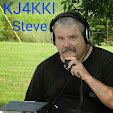
- Steve, KJ4KKI
- Welcome to my little piece of the cyberworld. I am an Amateur Extra Class ham radio operator from Kentucky. In addition to ham radio, other interests include paddling kayaks and canoes, camping, flyfishing, shooting and photography...I am a major Jimmy Buffett fan (fans are known as Parrotheads). But, location, work and finances sort of got in the way of being a beach bum as a career. I am also an animal lover and have several pets. I also have a Facebook page at steve.kj4kki.
Sunday, July 29, 2018


Tuesday, October 25, 2016
Buddistick/Buddipole vs. Par EndFedz by LNR Precision
Judging from my statistics, a lot of people visit my blog, but don't make comments. Oh Well...
I just bought a new antenna -- the Buddipole. I plan on using it as a Buddistick most of the time; especially until I can mount it high.
I like the fact that the Buddistick allows low angle radiation in a small footprint. That doesn't mean that I am not very fond of my LNR Precision's (Par) EndFedz antennas. I have several. Using my 40m/20m EF antenna on a 31 foot Jackite pole takes up some real estate. It's over sixty feet long. Even the 20 requires the mounting height, pole and a circumference of the 32 foot antenna coming off the wire.
That noted, the EndFedz achieve a very stable 1/2 wavelength antenna. They tune up very easily, with a very low SWR and resonance point at or close to 50 ohms. The 10/20/40 QRP antennas by LNR Precision can have a mono-band resonator of anywhere from 10m-60m in addition to the three-band performance. It's just that you have to get them up in the air...a situation that is not always possible.
This is very different than the Buddistick. It requires an 8 foot tall whip, my Jaws mount or camera tripod, and the counterpoise, which for 20m is relatively short. For small areas or vacations, this offers more options.
By being able to mount it at least 18 feet above ground, the Buddipole performs pretty well. An L configuration is a combination of vertical and horizontal. However, at low heights it mostly performs as an NVIS.
So, you know the basics. I'd like to hear any of your own experiences with this combination, or other antennas.
UPDATE: I recently bought two long arms and a long whip. This allows me 1/4 wavelength height with 1/4 wavelength counterpoise. This equals a 1/2 wavelength vertical antenna. As this is the standard length of a 20m antenna, it serves as a 1/2 wavelength 20m...as such, it performs like one.
This would mean that 40m would resonate at 1/4 wavelength...still a good compromise for a portable or temporary antenna; especially when compared to the stock Buddipole/Buddistick. As it goes up in frequency, the wavelength gets better and better. I haven't tried it on 80m. It would be 1/8th wavelength...finicky to tune and a narrow banded antenna to say the least.
I also purchased a Triple Ratio Switch Balun, only as the kit from the inventor. I put it together and it switches ratios with Power Poles. This allows a better match on lower bands, and still allows a 1:1 ratio on the upper bands.
It was a modest investment, but by going with Buddipole equipment, good quality and appearance matches are assured. The long arms do not fit into the plastic tube. So, you either have to carry it with the cap off or not in the tube at all. Another option is to get the long antenna bag. This is actually the best option for several reasons. It carries all the antenna components, and also has room to store additional supplies much more loosely than the Buddipole tube, which can be a rather tight fit.
I just bought a new antenna -- the Buddipole. I plan on using it as a Buddistick most of the time; especially until I can mount it high.
I like the fact that the Buddistick allows low angle radiation in a small footprint. That doesn't mean that I am not very fond of my LNR Precision's (Par) EndFedz antennas. I have several. Using my 40m/20m EF antenna on a 31 foot Jackite pole takes up some real estate. It's over sixty feet long. Even the 20 requires the mounting height, pole and a circumference of the 32 foot antenna coming off the wire.
That noted, the EndFedz achieve a very stable 1/2 wavelength antenna. They tune up very easily, with a very low SWR and resonance point at or close to 50 ohms. The 10/20/40 QRP antennas by LNR Precision can have a mono-band resonator of anywhere from 10m-60m in addition to the three-band performance. It's just that you have to get them up in the air...a situation that is not always possible.
This is very different than the Buddistick. It requires an 8 foot tall whip, my Jaws mount or camera tripod, and the counterpoise, which for 20m is relatively short. For small areas or vacations, this offers more options.
By being able to mount it at least 18 feet above ground, the Buddipole performs pretty well. An L configuration is a combination of vertical and horizontal. However, at low heights it mostly performs as an NVIS.
So, you know the basics. I'd like to hear any of your own experiences with this combination, or other antennas.
UPDATE: I recently bought two long arms and a long whip. This allows me 1/4 wavelength height with 1/4 wavelength counterpoise. This equals a 1/2 wavelength vertical antenna. As this is the standard length of a 20m antenna, it serves as a 1/2 wavelength 20m...as such, it performs like one.
This would mean that 40m would resonate at 1/4 wavelength...still a good compromise for a portable or temporary antenna; especially when compared to the stock Buddipole/Buddistick. As it goes up in frequency, the wavelength gets better and better. I haven't tried it on 80m. It would be 1/8th wavelength...finicky to tune and a narrow banded antenna to say the least.
I also purchased a Triple Ratio Switch Balun, only as the kit from the inventor. I put it together and it switches ratios with Power Poles. This allows a better match on lower bands, and still allows a 1:1 ratio on the upper bands.
It was a modest investment, but by going with Buddipole equipment, good quality and appearance matches are assured. The long arms do not fit into the plastic tube. So, you either have to carry it with the cap off or not in the tube at all. Another option is to get the long antenna bag. This is actually the best option for several reasons. It carries all the antenna components, and also has room to store additional supplies much more loosely than the Buddipole tube, which can be a rather tight fit.
Monday, November 30, 2015
Cursing Hams -- a truly bad example.
This evening, I was on 80m and 40m, playing around with my FT-857D. It is the accompanying mobile/portable radio to my shack FT-450. Anyway, I'm getting the feel of the menu selections and tweaking it.
On several rag chews, I hear at least one ham, if not the whole group using extremely foul language. They were curing in general; insulting each other and encouraging the group to have more drinks. Others used cursing to express their opinions on topics.
I read the books, articles and journals about what it means to be a ham radio operator. I have always considered myself to be polite and considerate on the air. I've even been as much of an email Elmer as I was able to. Keep in mind that this was on the Extra Class portion of the bands. To have people who are this rude and undeserving of the license truly upsets me. To think that they may be older hams; especially Extra Class...downright makes me angry. My only hope is that they might be preppers who never aimed to have any regard for acceptable radio behavior. It would be great if the FCC could find them and crack down on this type of behavior.
And while I am at it...please do not tune up on frequency during a net or other conversation.
On several rag chews, I hear at least one ham, if not the whole group using extremely foul language. They were curing in general; insulting each other and encouraging the group to have more drinks. Others used cursing to express their opinions on topics.
I read the books, articles and journals about what it means to be a ham radio operator. I have always considered myself to be polite and considerate on the air. I've even been as much of an email Elmer as I was able to. Keep in mind that this was on the Extra Class portion of the bands. To have people who are this rude and undeserving of the license truly upsets me. To think that they may be older hams; especially Extra Class...downright makes me angry. My only hope is that they might be preppers who never aimed to have any regard for acceptable radio behavior. It would be great if the FCC could find them and crack down on this type of behavior.
And while I am at it...please do not tune up on frequency during a net or other conversation.
Tuesday, May 12, 2015
Keep the Nepal Earthquake Victims in Your Thoughts and Prayers
Not a lot to report here on my own ham radio. I have gotten some good DX over the spring, talking to 1st time contacts in countries. But, that is not the point of my post.
My email just notified me of 2 more earthquakes in Nepal. After all they've been through, it is heart-breaking to think what has happened to their lives and general survival. Think about your norm... You get up and maybe eat breakfast. Then, you go off to work or school. Maybe you pick up the kids after school and take them to sports practice. Everybody has supper and maybe watches some television...or you get on the radio to see how the RF is doing.
Now imagine that taken away from you. Your home is gone. Maybe some family members or friends are dead. Your entire way of life is gone. That is what has happened to these people.
I was listening the other night to a rag chew on either 80m or 40m (I forget), and the topic was ham radio's emergency response and assistance in situations such as these. One ham commented that by the time anybody gets around to mentioning our role in the emergency, other agencies have taken over the limelight and we're often forgotten. Lots of times, we seldom get mentioned for the selfless volunteerism and personal cost that we "cheerfully" give. It can be a bit disappointing.
But as I mentioned, that isn't the topic. Let us continue to keep these disaster victims, and the aid workers in our hearts and prayers...and hope something like that never happens to us.
My email just notified me of 2 more earthquakes in Nepal. After all they've been through, it is heart-breaking to think what has happened to their lives and general survival. Think about your norm... You get up and maybe eat breakfast. Then, you go off to work or school. Maybe you pick up the kids after school and take them to sports practice. Everybody has supper and maybe watches some television...or you get on the radio to see how the RF is doing.
Now imagine that taken away from you. Your home is gone. Maybe some family members or friends are dead. Your entire way of life is gone. That is what has happened to these people.
I was listening the other night to a rag chew on either 80m or 40m (I forget), and the topic was ham radio's emergency response and assistance in situations such as these. One ham commented that by the time anybody gets around to mentioning our role in the emergency, other agencies have taken over the limelight and we're often forgotten. Lots of times, we seldom get mentioned for the selfless volunteerism and personal cost that we "cheerfully" give. It can be a bit disappointing.
But as I mentioned, that isn't the topic. Let us continue to keep these disaster victims, and the aid workers in our hearts and prayers...and hope something like that never happens to us.
Sunday, January 25, 2015
Passed Amateur Extra Exam--You Should Do It Also!
Well, today...after a very long period of procrastination...I passed my Extra exam with 94%. That means I missed 3 questions out of 50...well sort of... I didn't go with my first choice on a question on RMS/Peak to Peak Voltage, or I would have made a 96%. Anyway, for anyone thinking of pursuing the Amateur Extra Class, here are some words of encouragement.
First off, it is a workable goal. I once wrote a dissertation where the anxiety level was devastating. A professor told me the secret: one page at a time. Like a lot of hams, I aimed to go for it, but life, family and not wanting to give up free time just put studying on the back burner. I let the date expire on my ARRL study book, and then my 2 year subscription on Ham Test Online expired...still no exam. So, I re-purchased a 2 year subscription and got the Gordon West book to study. I also downloaded a ham test program to my tablet and phone.
I studied whenever possible. I tried to follow the advice on the web site of Ham Test Online. I would get tired of studying for a while, and then have to re-learn some of it. I would have to remind myself that this was something I really wanted, and to keep plugging along. I did one specific thing they suggested: I did not take a bunch of practice exams, but kept the program in study mode. In retrospect, I think that kept a lot of anxiety away as I did not keep failing exams while studying.
I drove to a city a little over an hour away to take the exam. If I failed it, at least the local guys wouldn't know about it... I don't recall a time when I've been so nervous about taking an exam. From what I'd heard, the Spanish Inquisition might have been easier. My hands were severely shaking while I filled out the form.
Then, I got the exam. I answered the questions that I knew the answer to first. Then, I went back to the so-so ones and completed them. Then, I completed the ones that were hardest. I wrote those down (something like 7-8) to see about later. The examiners graded the test, making wise-cracks about if I wanted to take the test again. Hoping for the best, I sat there and joked back with them. One of them took the questions I had noted and looked at them. I found out that if I had gone with my first choice on the RMS question, it would have been correct. Of the 7-8 I wrote down, only 1 was a wrong answer. I had been so afraid of all the electrical questions, math formulas, and components! In the end, not only were there less than I had anticipated, but they weren't that hard to answer.
In the end, I walked out as KJ4KKI/AE, soon to be an official Amateur Extra Class ham. The pressure to study is over. The anxiety is over. I sort of feel like a kid on Christmas night. The excitement is over; I have my toys, but the anticipation is gone. In that void, there is now a sense of pride and accomplishment. Like the Army, I want to be all that I can be.
I hope that you can get your Extra also. Good luck!
First off, it is a workable goal. I once wrote a dissertation where the anxiety level was devastating. A professor told me the secret: one page at a time. Like a lot of hams, I aimed to go for it, but life, family and not wanting to give up free time just put studying on the back burner. I let the date expire on my ARRL study book, and then my 2 year subscription on Ham Test Online expired...still no exam. So, I re-purchased a 2 year subscription and got the Gordon West book to study. I also downloaded a ham test program to my tablet and phone.
I studied whenever possible. I tried to follow the advice on the web site of Ham Test Online. I would get tired of studying for a while, and then have to re-learn some of it. I would have to remind myself that this was something I really wanted, and to keep plugging along. I did one specific thing they suggested: I did not take a bunch of practice exams, but kept the program in study mode. In retrospect, I think that kept a lot of anxiety away as I did not keep failing exams while studying.
I drove to a city a little over an hour away to take the exam. If I failed it, at least the local guys wouldn't know about it... I don't recall a time when I've been so nervous about taking an exam. From what I'd heard, the Spanish Inquisition might have been easier. My hands were severely shaking while I filled out the form.
Then, I got the exam. I answered the questions that I knew the answer to first. Then, I went back to the so-so ones and completed them. Then, I completed the ones that were hardest. I wrote those down (something like 7-8) to see about later. The examiners graded the test, making wise-cracks about if I wanted to take the test again. Hoping for the best, I sat there and joked back with them. One of them took the questions I had noted and looked at them. I found out that if I had gone with my first choice on the RMS question, it would have been correct. Of the 7-8 I wrote down, only 1 was a wrong answer. I had been so afraid of all the electrical questions, math formulas, and components! In the end, not only were there less than I had anticipated, but they weren't that hard to answer.
In the end, I walked out as KJ4KKI/AE, soon to be an official Amateur Extra Class ham. The pressure to study is over. The anxiety is over. I sort of feel like a kid on Christmas night. The excitement is over; I have my toys, but the anticipation is gone. In that void, there is now a sense of pride and accomplishment. Like the Army, I want to be all that I can be.
I hope that you can get your Extra also. Good luck!
Tuesday, April 29, 2014
Jackite 31 Foot Pole for Portable Ops
I wanted something to take portable, that would allow me a sufficient height above ground, and not require tossing line into trees...or trying to find trees. The Jackite pole was recommended to me.
While this 31 foot, telescoping pole is for their custom-made kites, it works great with lightweight antenna line. The key is to keep the matchbox/balun and coax at the bottom. That way, you only minimally bend the top of the pole, as it looks and behaves more like a giant fishing pole than a stiffer pole.
As I use it with LNR (Par) EndFedz antennas, I fasten the end of the resonator to the pole, and then put a nylon electric fence pole in the ground. I run the antenna as a sloper, and with a piece of cord, I hook the matchbox to the pole. This allows the electric fence pole to absorb the weight of the matchbox and coax. As the electric fence pole has a spike and step pad, it is super easy to just step on it and the stake is driven into even hard ground.
You can simply bungee cord the Jackite pole to a fence post, picnic table, etc., I came up with a great alternate design, where a pole, table or other support isn't available. I took 2 pieces of PVC pipe (one slightly smaller than the other), and fastened them together, side by side, with some hose clamps. The pole won't quite slide into it with the rubber bottom cap, so I slide the pole in from underneath. I then simply slide the smaller pipe over one of those green garden fence poles. I got a short one, and it works perfectly. No other supports are necessary.
UPDATE: If you run something like fishing line to the eyelet, you can lower the antenna to change it. This would allow you to change mono-band antennas, go from QRP to full power, etc.
I've never tried it, but I have one of those extender bars that fits into a receiver on my truck. Instead of having it go out, if it were vertical, a piece of chain link fence railing could be put inside and be great for sliding the Jackite pole over.
UPDATE: I bought a tailgating flagpole holder. You can make one with some wood, but this one is neat. It fits underneath the tire, The tube fits down into it, and a cotter pin locks it in place. Normally, this is all you need to do. The actual Jackite pole on my stand is a tad larger. So, I take the two PVC mounting poles and slip one over the tube, just like with the fence pole method.
One thing to watch out for is tightening it too much, or tightening it while under tension. I sort of got the last piece stuck in place like that. I've read where one or two people had them break and criticized them. Use common sense here. My EF dipole has a bit of slack in it...I don't try to make it completely straight, as I know that is a lot of tension.
A suggestion I can also make is if you design a wire antenna, use small gauge wire, and the pole barely knows it is there. As long as you can get sufficient bandwidth for your needs, the lighter wire performs great. I recommend (and use) Silky wire by The Wireman.
While this 31 foot, telescoping pole is for their custom-made kites, it works great with lightweight antenna line. The key is to keep the matchbox/balun and coax at the bottom. That way, you only minimally bend the top of the pole, as it looks and behaves more like a giant fishing pole than a stiffer pole.
As I use it with LNR (Par) EndFedz antennas, I fasten the end of the resonator to the pole, and then put a nylon electric fence pole in the ground. I run the antenna as a sloper, and with a piece of cord, I hook the matchbox to the pole. This allows the electric fence pole to absorb the weight of the matchbox and coax. As the electric fence pole has a spike and step pad, it is super easy to just step on it and the stake is driven into even hard ground.
You can simply bungee cord the Jackite pole to a fence post, picnic table, etc., I came up with a great alternate design, where a pole, table or other support isn't available. I took 2 pieces of PVC pipe (one slightly smaller than the other), and fastened them together, side by side, with some hose clamps. The pole won't quite slide into it with the rubber bottom cap, so I slide the pole in from underneath. I then simply slide the smaller pipe over one of those green garden fence poles. I got a short one, and it works perfectly. No other supports are necessary.
UPDATE: If you run something like fishing line to the eyelet, you can lower the antenna to change it. This would allow you to change mono-band antennas, go from QRP to full power, etc.
I've never tried it, but I have one of those extender bars that fits into a receiver on my truck. Instead of having it go out, if it were vertical, a piece of chain link fence railing could be put inside and be great for sliding the Jackite pole over.
UPDATE: I bought a tailgating flagpole holder. You can make one with some wood, but this one is neat. It fits underneath the tire, The tube fits down into it, and a cotter pin locks it in place. Normally, this is all you need to do. The actual Jackite pole on my stand is a tad larger. So, I take the two PVC mounting poles and slip one over the tube, just like with the fence pole method.
One thing to watch out for is tightening it too much, or tightening it while under tension. I sort of got the last piece stuck in place like that. I've read where one or two people had them break and criticized them. Use common sense here. My EF dipole has a bit of slack in it...I don't try to make it completely straight, as I know that is a lot of tension.
A suggestion I can also make is if you design a wire antenna, use small gauge wire, and the pole barely knows it is there. As long as you can get sufficient bandwidth for your needs, the lighter wire performs great. I recommend (and use) Silky wire by The Wireman.
Springtime...time to snag some 6m and DX
Well, spring has sprung... Time to get on the radio and see who is out there. I have somehow managed to talk to W1AW 3 times in 3 days. I've never talked to the ARRL station before. I got some new countries recently. I'm gradually making my way through the Caribbean countries. For a while, I wondered if I was ever going to get anything except Europe. Now, it seems like the RF Gods are directing me south, toward sunny, warm waters and into South America. For that, I am grateful. Now, if I just could snag that one state that is preventing me from getting my WAS.
I got the Small Antennas for Small Spaces book, by ARRL. Delay renewing your membership, and they get generous! Plus, I downloaded the issues I missed to my computer, so the only thing is just no hard copy issues laying around. I only casually read some of it last night and today, but it looks like it has some really good information.
I've been cruising through the 6m band, but haven't heard anybody. I thought I heard something today, but it was so weak that I couldn't be certain it was actually people. With a Par OA-50, fed with RG-8X at about 20 feet, I don't expect to get around the world. But, ya do what ya gotta do. I will say that when 6m opens up, I've gotten south Texas and south Florida with s-9 reports.
I have mentioned this before, but I use Par EndFedz antennas for /P. They are now made by LNR Precision. Combined with a Jackite telescoping pole at 31 feet, they do extremely well. They are a bit pricey, but they can be put up in several configurations, and once you cut them for SWR, they perform great.
Anyway, that's about it for now. Good luck with your radio adventures.
I got the Small Antennas for Small Spaces book, by ARRL. Delay renewing your membership, and they get generous! Plus, I downloaded the issues I missed to my computer, so the only thing is just no hard copy issues laying around. I only casually read some of it last night and today, but it looks like it has some really good information.
I've been cruising through the 6m band, but haven't heard anybody. I thought I heard something today, but it was so weak that I couldn't be certain it was actually people. With a Par OA-50, fed with RG-8X at about 20 feet, I don't expect to get around the world. But, ya do what ya gotta do. I will say that when 6m opens up, I've gotten south Texas and south Florida with s-9 reports.
I have mentioned this before, but I use Par EndFedz antennas for /P. They are now made by LNR Precision. Combined with a Jackite telescoping pole at 31 feet, they do extremely well. They are a bit pricey, but they can be put up in several configurations, and once you cut them for SWR, they perform great.
Anyway, that's about it for now. Good luck with your radio adventures.
Monday, July 1, 2013
Fantastic DXpedition DVD source and Field Day 2013 comments.
Well, FD 13 turned out pretty well. I didn't spend much time on the radio at all and got 26 contacts. Obviously, if I had more time, I could have gotten a lot more.
As expected, 40m and 20m were wide open and crowded. I have a 40m OCF, and 15m was open really well also. I have a Par OA-50 6m antenna that is only about 20-25 feet off of the ground. Usually, I don't get anything, especially living in Kentucky. Sunday morning, 6m opened up big time! The map was red with lines. I talked to south Texas and south Florida with 59 signals. Then I heard a CQ reply with my middle name (the one I go by). I answered it, and it was a ham about 5 miles away from me.
On to the next topic--DXpedition DVDs. I am a big fan of James Books' DVDs. He produces professional quality DVDs that are very enjoyable to watch. I have the expeditions to Kermadec Island down by New Zealand, and the Midway Island expedition. I just ordered the Clipperton Island DVD.
You should not only check out his web page, but at $25 with free shipping, purchase some of the DVDs.
http://www.dxvideos.com/index.htm
As expected, 40m and 20m were wide open and crowded. I have a 40m OCF, and 15m was open really well also. I have a Par OA-50 6m antenna that is only about 20-25 feet off of the ground. Usually, I don't get anything, especially living in Kentucky. Sunday morning, 6m opened up big time! The map was red with lines. I talked to south Texas and south Florida with 59 signals. Then I heard a CQ reply with my middle name (the one I go by). I answered it, and it was a ham about 5 miles away from me.
On to the next topic--DXpedition DVDs. I am a big fan of James Books' DVDs. He produces professional quality DVDs that are very enjoyable to watch. I have the expeditions to Kermadec Island down by New Zealand, and the Midway Island expedition. I just ordered the Clipperton Island DVD.
You should not only check out his web page, but at $25 with free shipping, purchase some of the DVDs.
http://www.dxvideos.com/index.htm
Thursday, June 6, 2013
MFJ-259B Antenna Analyzer
Not too much ham radio news to report. Just getting back on the air, after working midnights and being sick for a while. I'm working on getting all my wire antennas fine tuned, as I now have access to a MFJ-259B analyzer. This model is considerably cheaper than the next model up, and goes from HF through 2 meters. I just made a quarter-wave 2 meter, and it tuned great with very minor adjustments.
I have mixed feelings on the analyzer. Some screws were shorter than the others, and the banana plug for ladder line broke when I plugged it in. The edges of the case have some scratches. It appears that a screw holding on the SO-239 connector is either stripped of a nut has come loose. I'll check, however there is another one holding it in, so o.k. for now.
With these issues noted, it appears to work alright. My first impression was so-so, but as I use it more and more, I am increasingly pleased with the performance. I am going to expand a 40m OCF to 80m, as well as fine tune some EndFedz antennas, and some portable dipoles--a 20m, and a 10/20/40m. Hopefully, it will do alright with these. I do like the small size of it. I suppose as with any mass-produced equipment offered "affordably", there are compromises (?). MFJ retails it for $289, but Gigparts had it on a Dayton Hamfest sale for $215. That is tremendously more affordable than the one made by Comet.
eHam reviewers give it around 4.1/5.0 stars. People who like it, absolutely love it. I have talked to numerous hams at HRO, GigaParts, and radio manufacturers, and many of them have this model and praise it highly. I think the performance is probably there. I just think that they don't pay enough attention to preserving outside aesthetics, and I'm not sure about the soldering abilities...not that mine are any better. If it works, that is the issue. My Yaesu radios, Signalink and power supplies all came in pristine condition. The metal case has some scuffs, but it appears that it was powder coated before the corners were bent. A final note of confidence: When I called MFJ to tell the tech about the couple of shorter screws and broken banana plug, he seemed genuinely upset. A bag of screws and plug were promptly mailed to me. I'm hoping I don't need it, but they have the No Matter What warranty. I'll update as I get it used more in the field, and can report on it.
I managed to re-route some coax, and figured I'd give the 259 a decent workout. My 6m was about perfect on the meter. I had tuned it on my rig's SWR meter, and the amount the results matched were amazing. Based on small frequency differences around 50.125 MHz, it read 1:0-1:1 to 1 with 50-52 ohms. The 40m OCF did pretty well, but it needs closer attention. I have also tuned up a LNR) EndFedz 40/20. It made tuning it so easy. I got mid-band down to a 1.0-1.1:1 SWR at 50 ohms. I did notice that sometimes the analog meters don't precisely match the digital readout. But, the meters are only off by a very small amount. I can't believe how easy it is to work on antennas now, compared to making adjustments with my radio's SWR meter.
I have mixed feelings on the analyzer. Some screws were shorter than the others, and the banana plug for ladder line broke when I plugged it in. The edges of the case have some scratches. It appears that a screw holding on the SO-239 connector is either stripped of a nut has come loose. I'll check, however there is another one holding it in, so o.k. for now.
With these issues noted, it appears to work alright. My first impression was so-so, but as I use it more and more, I am increasingly pleased with the performance. I am going to expand a 40m OCF to 80m, as well as fine tune some EndFedz antennas, and some portable dipoles--a 20m, and a 10/20/40m. Hopefully, it will do alright with these. I do like the small size of it. I suppose as with any mass-produced equipment offered "affordably", there are compromises (?). MFJ retails it for $289, but Gigparts had it on a Dayton Hamfest sale for $215. That is tremendously more affordable than the one made by Comet.
eHam reviewers give it around 4.1/5.0 stars. People who like it, absolutely love it. I have talked to numerous hams at HRO, GigaParts, and radio manufacturers, and many of them have this model and praise it highly. I think the performance is probably there. I just think that they don't pay enough attention to preserving outside aesthetics, and I'm not sure about the soldering abilities...not that mine are any better. If it works, that is the issue. My Yaesu radios, Signalink and power supplies all came in pristine condition. The metal case has some scuffs, but it appears that it was powder coated before the corners were bent. A final note of confidence: When I called MFJ to tell the tech about the couple of shorter screws and broken banana plug, he seemed genuinely upset. A bag of screws and plug were promptly mailed to me. I'm hoping I don't need it, but they have the No Matter What warranty. I'll update as I get it used more in the field, and can report on it.
I managed to re-route some coax, and figured I'd give the 259 a decent workout. My 6m was about perfect on the meter. I had tuned it on my rig's SWR meter, and the amount the results matched were amazing. Based on small frequency differences around 50.125 MHz, it read 1:0-1:1 to 1 with 50-52 ohms. The 40m OCF did pretty well, but it needs closer attention. I have also tuned up a LNR) EndFedz 40/20. It made tuning it so easy. I got mid-band down to a 1.0-1.1:1 SWR at 50 ohms. I did notice that sometimes the analog meters don't precisely match the digital readout. But, the meters are only off by a very small amount. I can't believe how easy it is to work on antennas now, compared to making adjustments with my radio's SWR meter.
Tuesday, January 29, 2013
CW, Awards and Stuff
Not too much going on in my ham radio stuff lately. After a new midnight job, not much time left for the radio. I am down to one state for my WAS.
I received my Appalachian Trail Basic Award for contacting every state the AT runs through. I also got my 3905 Century Club 100 Point Award for various contacts. Back in the summer, I became a member of the Old Man International Sideband Society, and recently became a member of the Straight Key Century Club.
Right now, I am in the process of learning CW. I am using a Morse Express T-Tone practice oscillator, and an Ameco K-4R J-38 key. One day, I've got my sights on a Begali Camelback Key (maybe). Who knows?
I am hoping things will stabilize out and I can get some contacts going. With some warm weather, maybe I can get outside for some portable work. I did get a Youth DX Adventure special event in Costa Rica last summer. They sent me a very pretty, 4 page QSL card.
I guess that is about all for now.
Steve
I received my Appalachian Trail Basic Award for contacting every state the AT runs through. I also got my 3905 Century Club 100 Point Award for various contacts. Back in the summer, I became a member of the Old Man International Sideband Society, and recently became a member of the Straight Key Century Club.
Right now, I am in the process of learning CW. I am using a Morse Express T-Tone practice oscillator, and an Ameco K-4R J-38 key. One day, I've got my sights on a Begali Camelback Key (maybe). Who knows?
I am hoping things will stabilize out and I can get some contacts going. With some warm weather, maybe I can get outside for some portable work. I did get a Youth DX Adventure special event in Costa Rica last summer. They sent me a very pretty, 4 page QSL card.
I guess that is about all for now.
Steve
Sunday, June 24, 2012
Field Day 2012 & Stuff
Well, FD 2012 is over. I hope everybody got some good contacts. I didn't spend that much time on the air--worked it in between household chores, meals, etc. I got 25 contacts on 15, 20 and 40m. They are now logged into QRZ, and everybody was sent an eQSL. Hard copy cards are available upon request. *Hardcopy cards with a SASE were sent out around Christmas for most contacts.
I finally got a second South American Contact this past week--Bogata, Columbia. That makes 2, after trying for a year. Yesterday, I got my last state to complete the Appalachian Trail Basic Award for contacting stations in each state the AT goes through. I'd actually gotten TN before, but it was on an FM sat, whereas it has to be HF.
Speaking of states, I got my home state of Kentucky a few weeks ago. You'd think that it wouldn't be that difficult to get the state you live in. It apparently can be. Now of course, they've come out of the woodwork and I hear a KY station every couple of days.
After trying and trying, I also finally got Alaska. With a modest dipole that for 40m, is only 1/4 wavelength above the ground, it took me a while. That leaves me 3 states for my WAS. I guess I qualify (or will soon) for my 100 point award with the 3905 Century Club Net. I need to read the rules.
I finally got a second South American Contact this past week--Bogata, Columbia. That makes 2, after trying for a year. Yesterday, I got my last state to complete the Appalachian Trail Basic Award for contacting stations in each state the AT goes through. I'd actually gotten TN before, but it was on an FM sat, whereas it has to be HF.
Speaking of states, I got my home state of Kentucky a few weeks ago. You'd think that it wouldn't be that difficult to get the state you live in. It apparently can be. Now of course, they've come out of the woodwork and I hear a KY station every couple of days.
After trying and trying, I also finally got Alaska. With a modest dipole that for 40m, is only 1/4 wavelength above the ground, it took me a while. That leaves me 3 states for my WAS. I guess I qualify (or will soon) for my 100 point award with the 3905 Century Club Net. I need to read the rules.
Saturday, June 9, 2012
Update
Not too much to report here. I enjoyed Museum Ships Weekend, and got some good contacts. I managed to have contacts in Ecuador, the Slovak Republic (and 2 Russian stations a while back), and some more states. I found out about the 3905 Century Club Net on 40m. It is a good way to get WAS and other awards.
I decided to hold off on my Extra Class exam until July. It will be the new material, but with Ham Test Online, it is proving to be a good way to study. I have the current ARRL book, but I went ahead and got the 2012-2016 book by Gordo to read and compare.
That's about all to report for now. Hope everybody is getting some good DX.
I decided to hold off on my Extra Class exam until July. It will be the new material, but with Ham Test Online, it is proving to be a good way to study. I have the current ARRL book, but I went ahead and got the 2012-2016 book by Gordo to read and compare.
That's about all to report for now. Hope everybody is getting some good DX.
Saturday, May 12, 2012
Are Hams Getting Apathetic?
I haven't written much lately. I have noticed that while I get a lot of hits, nobody leaves comments, and I would guess nobody links my blog to anyplace else. I have also noticed that as many members as Ham Radio Nation has, most polls get a weak response. To make that worse, the number of people who vote or make comments is only a fraction of the number of people who look at the poll.
My main reason for not babbling on with a lot of trivial posts has to do with the fact that I don't want to hopelessly bore somebody who hits this link. While it lists noteworthy accomplishments and events, I don't go on about what I ate for breakfast, or every time I did something mundane.
Some ham clubs report weak memberships, and sad participation in club and community service events. Getting young people involved should be a primary goal with hams. A local high school in my town just got a class of new hams, and their own station call sign. But, they only get to talk to local hams on the repeater, and don't have any equipment that is their own. Their teacher told me that they are getting bored. We will spend tax dollars to get new furniture for the school board, but is it too much to ask to invest in some radio equipment for students? The science link, such as astronomy and physics, and math link to ham radio is obvious. Classes that deal with electricity such as electives and vocational education have a definite link. The benefits of a lifelong and potentially life-saving hobby seem obvious also.
I notice in my own club that a majority of hams are retired...some for quite a few years. Where do we get the new blood. According to statistics, there are more hams being licensed. We have a responsibility to keep them interested, so those numbers reflect active hams, and do not reflect a lot of inactive licenses waiting to expire. At least that's my thought for the week.
Oh yeah, I misplaced one of my portable antennas--a 20m EndFedz. If anybody knows where it is, let me know. :)
My main reason for not babbling on with a lot of trivial posts has to do with the fact that I don't want to hopelessly bore somebody who hits this link. While it lists noteworthy accomplishments and events, I don't go on about what I ate for breakfast, or every time I did something mundane.
Some ham clubs report weak memberships, and sad participation in club and community service events. Getting young people involved should be a primary goal with hams. A local high school in my town just got a class of new hams, and their own station call sign. But, they only get to talk to local hams on the repeater, and don't have any equipment that is their own. Their teacher told me that they are getting bored. We will spend tax dollars to get new furniture for the school board, but is it too much to ask to invest in some radio equipment for students? The science link, such as astronomy and physics, and math link to ham radio is obvious. Classes that deal with electricity such as electives and vocational education have a definite link. The benefits of a lifelong and potentially life-saving hobby seem obvious also.
I notice in my own club that a majority of hams are retired...some for quite a few years. Where do we get the new blood. According to statistics, there are more hams being licensed. We have a responsibility to keep them interested, so those numbers reflect active hams, and do not reflect a lot of inactive licenses waiting to expire. At least that's my thought for the week.
Oh yeah, I misplaced one of my portable antennas--a 20m EndFedz. If anybody knows where it is, let me know. :)
Sunday, April 15, 2012
Par EndFedz 10/20/40 Mark II
I recently received my EF-10/20/40 from LnR Precision. While I haven't gotten it in the air yet, I will give you my preliminary observations.
The build quality is just as good as my 20m model. The main difference is the shortening stub in the line. It is about as long as a small pickle. I suppose it serves as a loading coil. While the 20m is about 32 feet long, the 40m model is about 40 or so feet long--significantly shorter than a traditional 40m dipole. Hence, the shortening coil.
Unlike the other models in the line, this one has a matchbox that allows it to be used on 10-60m. I bought some wire from The Wireman (#534), which is .26 gauge "silky" wire. I soldered resonators to end rings, and then put hot glue over the section where the wire goes into the connector, as there isn't any insulation. It seems logical that without insulation, the breaking and twisting point would be more critical.
I think that once I put it up with my 31' Jackite pole, it will yield some good results. I can recommend these antennas highly. Just remember that this is a QRP model, with a 25 watt limit. For digital, I've been told to keep it to around 10 watts just to be safe.
UPDATE: I had originally planned to make individual resonators for other bands. After giving it some thought, I decided to make a jumpered dipole...only requiring one wire to include. The add-ons could be held in place by power poles or alligator clips.
The build quality is just as good as my 20m model. The main difference is the shortening stub in the line. It is about as long as a small pickle. I suppose it serves as a loading coil. While the 20m is about 32 feet long, the 40m model is about 40 or so feet long--significantly shorter than a traditional 40m dipole. Hence, the shortening coil.
Unlike the other models in the line, this one has a matchbox that allows it to be used on 10-60m. I bought some wire from The Wireman (#534), which is .26 gauge "silky" wire. I soldered resonators to end rings, and then put hot glue over the section where the wire goes into the connector, as there isn't any insulation. It seems logical that without insulation, the breaking and twisting point would be more critical.
I think that once I put it up with my 31' Jackite pole, it will yield some good results. I can recommend these antennas highly. Just remember that this is a QRP model, with a 25 watt limit. For digital, I've been told to keep it to around 10 watts just to be safe.
UPDATE: I had originally planned to make individual resonators for other bands. After giving it some thought, I decided to make a jumpered dipole...only requiring one wire to include. The add-ons could be held in place by power poles or alligator clips.
Saturday, March 3, 2012
Update
While other parts of Kentucky literally got destroyed, we did o.k. Tornadoes warnings were posted for the south and north of town, but I don't think anything other than trees suffered major damage locally. Even the hail and high wind seemed to have missed my part of town.
I've also had good luck in turning my radio power down. I've been running it between 25 and 50 watts and getting very good reports. I haven't been able to be on the radio much at all lately, but I'm going to try and experiment more with 5 watts as I can.
Anyway, that is about all for now.
I've also had good luck in turning my radio power down. I've been running it between 25 and 50 watts and getting very good reports. I haven't been able to be on the radio much at all lately, but I'm going to try and experiment more with 5 watts as I can.
Anyway, that is about all for now.
Saturday, January 21, 2012
I'm Trying Out QRP SSB
Previously, like most of you I suppose, I had been using 100 watts for QSOs. Hopefully, this year, I'll be able to afford a truly portable radio, instead of disconnecting all the cables from my FT-450 and lugging it around.
I've been comparing the FT-817ND and the FT-857D. There is some price difference, and obviously the 857 has 100 watts and more filtering vs. the 5 watt, small footprint, minimal filtering of the 817. So, I turned my radio down to 5 watts and I've been making contacts. So far, the reports have been good. I was feeling all proud of myself until a net control op told me that my audio was what was punching me through. I got to thinking about it. My 450 base station mic is set to high gain and is a good quality mic. The 817 would probably need the add-on to get up to that point, if at all.
Anyway, contacts have been made with my 40m OCF. At 40m, it resonates as a 1/2 wave dipole. At 20m, it has a bit stronger wavelength. So, all things being equal, am I truly getting an accurate QRP experience? Or, based on the OCF, superior mic of the 450, and quality base rig, am I just getting the QRP experience, or just a watered down output? I guess to truly understand this one, I'll have to take my portable antennas out and set up my Jackite pole, turn my mic down to normal gain, and see how things turn out.
That said, the 817 is one darned cute radio, capable of small storage space, low battery drain, and it can run on lower power than the 857. Oh well...I guess trial and error will be helpful. Hopefully, some of you will reply with your own comments.
73,
Steve
I've been comparing the FT-817ND and the FT-857D. There is some price difference, and obviously the 857 has 100 watts and more filtering vs. the 5 watt, small footprint, minimal filtering of the 817. So, I turned my radio down to 5 watts and I've been making contacts. So far, the reports have been good. I was feeling all proud of myself until a net control op told me that my audio was what was punching me through. I got to thinking about it. My 450 base station mic is set to high gain and is a good quality mic. The 817 would probably need the add-on to get up to that point, if at all.
Anyway, contacts have been made with my 40m OCF. At 40m, it resonates as a 1/2 wave dipole. At 20m, it has a bit stronger wavelength. So, all things being equal, am I truly getting an accurate QRP experience? Or, based on the OCF, superior mic of the 450, and quality base rig, am I just getting the QRP experience, or just a watered down output? I guess to truly understand this one, I'll have to take my portable antennas out and set up my Jackite pole, turn my mic down to normal gain, and see how things turn out.
That said, the 817 is one darned cute radio, capable of small storage space, low battery drain, and it can run on lower power than the 857. Oh well...I guess trial and error will be helpful. Hopefully, some of you will reply with your own comments.
73,
Steve
Portable Operations Ideas Part 1 of 4
Like most hams, I envision using my radio in the field as much as possible. I don't claim to be an expert, but I do read a lot and network...something all hams should do. While I don't backpack with it, I'll mention factors associated with carrying your radio in a pack. But, for a lot of hams, just having their radio in the outdoors is a lot of fun. Doing some DX from a national park, or from atop a mountain, etc. can be quite satisfying. Drive to a location, set up the gear and enjoy the day. Bring some food and sodas, and it's a fun day, regardless of DX conditions. So, here is an article which addresses some considerations. It doesn't include everything there is, and it is my own personal opinion. But, I hope you'll gain some additional insight into making your own portable station. Questions to consider are what to use, weight considerations, effectiveness and of course, cost factors.
For simplicity, I won't go into detail about the differences of QRP radios. They range from single channel kits that fit into Altoids containers, Elecraft models, up to radios such as the Yaesu FT-817ND and FT-857D. As I don't do CW, obviously a phone radio is my choice, and Yaesu is my brand of choice. I also won't discuss CW paddles.
You need a good quality antenna. That doesn't mean expensive. Lots of QRP'ers make their own dipoles out of small gauge wire. The end result is usually a dipole, which can be mono band, or multi-band with alligator clips for band jumpers. Both are reasonably easy to make. Plans are available for the jumper version, and I can either tell you how to do it, or point you to an article. Throw support lines over trees and you're ready for some DX.
Another fantastic antenna is the EndFedz antenna, now made by LnR Precision. Dale Parfitt, of PAR Electronics designed and made them for years, but Dale has so much government work that he sold the business to Larry Draughon. Both companies are great to deal with, and eager to talk about the products. With LnR, you'll probably get Randy Drake, who usually goes into great detail when answering emails. I prefer the EndFedz antennas because they are super easy to use, either as a horizontal, vertical, sloper or inverted L configuration, and have a built-in balun. Most of the models are 100 watt mono band, although there is a 10/20 meter model and a QRP 10/20/40 meter version. The 10/20/40 is especially popular with portable ops, particularly where CW is used. Once the resonance point is established, they have a very wide range and height or mounting method doesn't seem to affect them that much, with the exception of the 10/20/40 which has a narrow 40 meter bandwidth of 100 kHz. I especially like the 10/20/40 because you can take the resonator off, and use other bandwidths by cutting some wire to a half-wavelength and fastening it on. Multi-band use with one balun is an attractive feature. Mono bands have very wide bandwidths, up to 700 kHz on the 10 meter model. One reason why these antennas are so popular is because they only require one attachment point in the air. I typically use mine as a sloper. Tie it between two trees and you have a flat top dipole. Use it as a sloper, Hang it vertically out of a motel room window, or use it as an L. It's one of the most versatile antennas made. The quality of the EndFedz is first rate, very well thought of in the ham radio community. With the 10/20/40, keep it to 10 watts for PSK, as it is full duty cycle.
Whether or not you use a balun is up to you. I have a small Balun Designs QRP balun that comes in handy for dipoles. EndFedz come with built-in baluns. Some people don't even use baluns, especially for QRP, while others use an air choke balun (uses a lot of coax). I use a modification on the conventional way to have a multi-band antenna. My QRP balun has wing nuts, and I cut several different bands and put end rings on them. It's super easy to just unscrew the nut and change bands. Being mono band, there is no bulk or tangle factor associated with band jumpers, and they are easy to tune the SWR for. The QRP balun is very small. Obviously, a full sized balun will not work for portable, unless you drive to the location and use it like a base antenna.
Two antennas that are popular include the Buddipole and Buddistick. Both offer multi-band operation and are extremely versatile. The Buddistick is a vertical antenna with one counterpoise that supposedly when matched with the coil clip to have resonance, doesn't need any additional wires. The Buddipole can be configured in a number of ways, including vertical, sloper, L, dipole, etc. For serious portable and DXpedition users, the Buddipole is very popular. The good thing is that no trees or buildings are needed, like a dipole would require. Chris is very helpful in answering questions, and Budd can often be found on the radio, discussing the various applications of his antenna design. Chris now runs the company. Chris is usually in the Buddies in the Caribbean videos on YouTube. My main gripe is that by adjusting the jumper clips and length of pole arms, it requires a bit of trial and error, and certain bands can be difficult to get the SWR adjusted on. I've read where most people like to use an antenna analyzer with them. The Buddistick runs about $139 for the bare-bones basic model. The Buddipole basic kit is $199. However, to do what is shown in some of the photos, or suggested configurations requires additional components that can easily raise the price by over $100. However, if I had the money to spare for a Buddipole, with accessories, I would purchase one. That noted, I like dipoles. They are inexpensive for homebrew versions. Even if you prefer to spend the money on EndFedz which range from $52 to $95, purchasing one or so a year is workable, particularly with a credit card or PayPal. Cut them once and use them. And finally, there are probably some homebrew or other types of antennas suitable for field use that I can't think of at the moment. One last note: For VHF/UHF use in the field, Arrow II sat antennas and Elk Log Periodic antennas are the way to go, for portability, durability, and quality for the price.
Radios obviously need a power supply to work. Radios which can run on a low power drain (such as homebrew QRP CW kit rigs, FT-817, and others) can use regular batteries. The 817 even has an option of a built-in battery or a battery tray. A built-in battery doesn't last that long in the field and drops the power output down automatically. This can be a consideration if you are planning to do phone, have lousy band conditions or lots of stations on the air.
Sealed Lead Acid Batteries (SLAB) are popular. Examples would be a fish finder battery, lawn mower battery, etc. They are very affordable. Cabela's outdoor supply has an 8 amp hour (Ah) model that receives great reviews, and costs about $25, which includes a charger. Two batteries with the charger costs $55. Other brands can cost and weigh more, and you can get much higher Ah ratings. Yes, they are a bit heavy for multi-day trips. But, for a short hike, over-nighter, or a day trip to somewhere that doesn't have power, they are a very valid consideration. Getting to your destination by four wheeler, canoe, etc. can make these batteries a very good match for your radio. By turning down the power, most rigs will run a long time with one. We like to car camp at primitive campgrounds that don't have power supply lines. The SLABs allow operating from a comfortable picnic table, or lawn chair. Like everything, a bit of commonsense comes into play here. Take an 8 Ah SLAB and key a 22 amp draw radio, and it won't last long... Turn that radio down to about 5-10 watts output, and now the SLAB will go for a long time. For times when I can use the vehicle battery, I have battery clips with power poles, where I can just hook my rig up to the battery. I can use 100 watts if I need to from this strong of a power source. This directly relates to portable use, because whether you prefer low power or high power, phone or CW or digital, this significantly affects your need for power. Does QRP do as well as higher power? Band conditions, location, antenna and pileups have a lot to do with it. I've gotten out with 5 watts, and never could get a station with 100 watts. It depends on variables. One additional consideration is that both CW and digital modes are full-duty cycle, so low power is a necessity.
Another popular battery is the A123 lithium polymer, made by Buddipole. Prices range from $65 for a 2.3 Ah model, up to $265 for a 9.2 Ah model. They are becoming very popular and are built solid, with thick heatshrink wrap, power pole connectors, and a self-resetting internal switch to prevent short circuits. This a real concern for portable use, where you use slide on connectors or alligator clips, etc. While I'm on the topic, Anderson Power Poles are a must-have for ease of use. Hook them up in the ARES configuration, and they can be used with other power poles in the same configuration without sliding them apart.
For simplicity, I won't go into detail about the differences of QRP radios. They range from single channel kits that fit into Altoids containers, Elecraft models, up to radios such as the Yaesu FT-817ND and FT-857D. As I don't do CW, obviously a phone radio is my choice, and Yaesu is my brand of choice. I also won't discuss CW paddles.
You need a good quality antenna. That doesn't mean expensive. Lots of QRP'ers make their own dipoles out of small gauge wire. The end result is usually a dipole, which can be mono band, or multi-band with alligator clips for band jumpers. Both are reasonably easy to make. Plans are available for the jumper version, and I can either tell you how to do it, or point you to an article. Throw support lines over trees and you're ready for some DX.
Another fantastic antenna is the EndFedz antenna, now made by LnR Precision. Dale Parfitt, of PAR Electronics designed and made them for years, but Dale has so much government work that he sold the business to Larry Draughon. Both companies are great to deal with, and eager to talk about the products. With LnR, you'll probably get Randy Drake, who usually goes into great detail when answering emails. I prefer the EndFedz antennas because they are super easy to use, either as a horizontal, vertical, sloper or inverted L configuration, and have a built-in balun. Most of the models are 100 watt mono band, although there is a 10/20 meter model and a QRP 10/20/40 meter version. The 10/20/40 is especially popular with portable ops, particularly where CW is used. Once the resonance point is established, they have a very wide range and height or mounting method doesn't seem to affect them that much, with the exception of the 10/20/40 which has a narrow 40 meter bandwidth of 100 kHz. I especially like the 10/20/40 because you can take the resonator off, and use other bandwidths by cutting some wire to a half-wavelength and fastening it on. Multi-band use with one balun is an attractive feature. Mono bands have very wide bandwidths, up to 700 kHz on the 10 meter model. One reason why these antennas are so popular is because they only require one attachment point in the air. I typically use mine as a sloper. Tie it between two trees and you have a flat top dipole. Use it as a sloper, Hang it vertically out of a motel room window, or use it as an L. It's one of the most versatile antennas made. The quality of the EndFedz is first rate, very well thought of in the ham radio community. With the 10/20/40, keep it to 10 watts for PSK, as it is full duty cycle.
Whether or not you use a balun is up to you. I have a small Balun Designs QRP balun that comes in handy for dipoles. EndFedz come with built-in baluns. Some people don't even use baluns, especially for QRP, while others use an air choke balun (uses a lot of coax). I use a modification on the conventional way to have a multi-band antenna. My QRP balun has wing nuts, and I cut several different bands and put end rings on them. It's super easy to just unscrew the nut and change bands. Being mono band, there is no bulk or tangle factor associated with band jumpers, and they are easy to tune the SWR for. The QRP balun is very small. Obviously, a full sized balun will not work for portable, unless you drive to the location and use it like a base antenna.
Two antennas that are popular include the Buddipole and Buddistick. Both offer multi-band operation and are extremely versatile. The Buddistick is a vertical antenna with one counterpoise that supposedly when matched with the coil clip to have resonance, doesn't need any additional wires. The Buddipole can be configured in a number of ways, including vertical, sloper, L, dipole, etc. For serious portable and DXpedition users, the Buddipole is very popular. The good thing is that no trees or buildings are needed, like a dipole would require. Chris is very helpful in answering questions, and Budd can often be found on the radio, discussing the various applications of his antenna design. Chris now runs the company. Chris is usually in the Buddies in the Caribbean videos on YouTube. My main gripe is that by adjusting the jumper clips and length of pole arms, it requires a bit of trial and error, and certain bands can be difficult to get the SWR adjusted on. I've read where most people like to use an antenna analyzer with them. The Buddistick runs about $139 for the bare-bones basic model. The Buddipole basic kit is $199. However, to do what is shown in some of the photos, or suggested configurations requires additional components that can easily raise the price by over $100. However, if I had the money to spare for a Buddipole, with accessories, I would purchase one. That noted, I like dipoles. They are inexpensive for homebrew versions. Even if you prefer to spend the money on EndFedz which range from $52 to $95, purchasing one or so a year is workable, particularly with a credit card or PayPal. Cut them once and use them. And finally, there are probably some homebrew or other types of antennas suitable for field use that I can't think of at the moment. One last note: For VHF/UHF use in the field, Arrow II sat antennas and Elk Log Periodic antennas are the way to go, for portability, durability, and quality for the price.
Radios obviously need a power supply to work. Radios which can run on a low power drain (such as homebrew QRP CW kit rigs, FT-817, and others) can use regular batteries. The 817 even has an option of a built-in battery or a battery tray. A built-in battery doesn't last that long in the field and drops the power output down automatically. This can be a consideration if you are planning to do phone, have lousy band conditions or lots of stations on the air.
Sealed Lead Acid Batteries (SLAB) are popular. Examples would be a fish finder battery, lawn mower battery, etc. They are very affordable. Cabela's outdoor supply has an 8 amp hour (Ah) model that receives great reviews, and costs about $25, which includes a charger. Two batteries with the charger costs $55. Other brands can cost and weigh more, and you can get much higher Ah ratings. Yes, they are a bit heavy for multi-day trips. But, for a short hike, over-nighter, or a day trip to somewhere that doesn't have power, they are a very valid consideration. Getting to your destination by four wheeler, canoe, etc. can make these batteries a very good match for your radio. By turning down the power, most rigs will run a long time with one. We like to car camp at primitive campgrounds that don't have power supply lines. The SLABs allow operating from a comfortable picnic table, or lawn chair. Like everything, a bit of commonsense comes into play here. Take an 8 Ah SLAB and key a 22 amp draw radio, and it won't last long... Turn that radio down to about 5-10 watts output, and now the SLAB will go for a long time. For times when I can use the vehicle battery, I have battery clips with power poles, where I can just hook my rig up to the battery. I can use 100 watts if I need to from this strong of a power source. This directly relates to portable use, because whether you prefer low power or high power, phone or CW or digital, this significantly affects your need for power. Does QRP do as well as higher power? Band conditions, location, antenna and pileups have a lot to do with it. I've gotten out with 5 watts, and never could get a station with 100 watts. It depends on variables. One additional consideration is that both CW and digital modes are full-duty cycle, so low power is a necessity.
Another popular battery is the A123 lithium polymer, made by Buddipole. Prices range from $65 for a 2.3 Ah model, up to $265 for a 9.2 Ah model. They are becoming very popular and are built solid, with thick heatshrink wrap, power pole connectors, and a self-resetting internal switch to prevent short circuits. This a real concern for portable use, where you use slide on connectors or alligator clips, etc. While I'm on the topic, Anderson Power Poles are a must-have for ease of use. Hook them up in the ARES configuration, and they can be used with other power poles in the same configuration without sliding them apart.
Portable Operations Ideas Part 2 of 4
Last, we'll discuss solar panels as a power supply/charging device. They are out of my price range...period. Very limited power ones are available very cheaply, but the quality ones do cost a lot of money. For someone with a more discretionary budget, they are a good item to have in your portable arsenal. Used with QRP rigs, they keep your batteries charged and provide power for a long time. However, getting one that will power rigs that draw more amps can get quite expensive. So many companies make them, that I won't quote prices or models.
Tuners are a much-debated subject. Some people take a tuner with them...period. I don't use an external tuner as my base/fairly mobile/sort of portable FT-450AT has an internal tuner. It's a 3:1 match, but I try to cut antennas to the lowest SWR and don't anticipate trying to match a 10:1 mismatch, as some manufacturers claim. Having a 10:1 mismatch...really? With mine, I simply push the tune button. If it won't tune, it's either too far out of resonance, or I accidentally hit the "wrong" band button. Now that I've discussed on-board tuners, which people either love or hate, trust or don't trust, we'll give consideration to external meters and tuners. I like the idea of a quality external power/SWR meter, especially for rigs that have those pathetic displays. So many small radios don't have these features, or they are simply bars to look at and have a ballpark figure. Was that three bars or four? Which bar means how much SWR? I can't remember... I want a number as a reference.
While lots of people don't use external tuners, a lot do. Some people like to fiddle with knobs, while others like to push a button or have an auto-tuner. I'm a push the button or full auto-tune kind of person...actually a push the button once and let the tuner do the work person. For auto-tuners, LDG seems to be the major player. They make dedicated tuners for some Yaesu and Icom models, including the QRP tuner for an 817. The Z-100 Plus has a button you push when you want to tune, while other models monitor and memorize settings for different frequencies. The Z-100 Plus retails for $149. The Z-11 ProII is very popular and totally automatic. It costs about $20 or so dollars more than the Z-100 Plus. The difference between the two is that 1) the Z-100 Plus has one button that you push every time you want to tune, whereas after the first tune, the Z-11 ProII tunes once and is then continuous auto tune. 2) The Z-100 has one button, while the Z-11 has multiple buttons for specific settings. I like the fact that you can plug a radio interface jumper into your radio from the tuner. LDG also makes dedicated power/SWR meters that can plug directly into some radios, such as the Yaesu FT-857. One less piece of coax to contend with in-line. Again, the different models suit different radios and different users. If your antenna is resonant, your radio works well and your coax doesn't have a short, do you need one? The choice is up to you.
You've got a radio, an antenna, a power source, an optional tuner and your log (and 2 pens or pencils). You're ready to go, right? What about getting the antenna in the air? Hopefully, you'll have trees nearby if you use a dipole. If you use a Buddistick, it fits on a camera tripod or picnic table. The Buddipole can be mounted on an expanding tripod/pole that Buddipole makes or other portable uses such as an adaptor that you can use with painters' pole.. For auto trips, many people use painters' poles. I've even used hose clamps and fastened two together. I have three painters' poles, and a satellite dish tripod for RVs. It is super heavy duty. Neither are pack-light, but suitable for a day outing to a park, or camping in a campground. Note that I mentioned suitable...not great. You've still got a long pole to store in your vehicle, and one which is too bulky or heavy to take on a trail. I also have a tiki torch stake that I hammer into the ground. My fiberglass painters' pole fits perfectly in it. Some guy lines to make it stable and I'm good to go. Granted, this application does not make for a very tall antenna. If you're on a mountain, close to water, etc. your antenna performance is increased. However, I've worked Europe from Kentucky, with a dipole 13 feet off of the ground in front of my house, in a crowded subdivision, with a transformer and power lines a few feet away. Many factors come into play.
One item that hams are discovering is the telescoping "light-weight" fiberglass pole. Several companies, both in the U.S. and Europe make them. One such company is Jackite. The poles were originally developed for flying their mylar bird kites and banners. They make up to a 31 foot tall model, which weighs about four pounds. The prices are reasonable--$54 for a 28 foot model, to $69 for the 31 foot model. They are very flexible, like a fishing pole, but heavy duty and have a 2 inch wide base. Disclaimer: They are meant to be used for small gauge wire antennas. Do not try to use a regular antenna, or hang a ferrite core balun from one... It will either bend over, or break. I know one ham who has several and he loves them. I'm going to get one for my ham radio arsenal. For small gauge dipoles or EndFedz, they are ideally suited. Color patterns available include black, camo, orange, etc. A company rep told me that the 31 foot, regular model in black is the most popular version for hams. They do make a stronger model--the platinum series. It costs about $54 for a 28 foot tall version, and weighs about 7 pounds. For most uses and especially if you take it hiking, the regular weighs a lot less. Again, the company says the regular model is the most common. I've read where when compared side by side, they are considered superior to the version made by MFJ. I have the 31 foot, black model. So far, I like it, but it is definitely for light antennas. I've been hesitant to bend it too much. I suppose it's meant to flex a lot, but I try to be gentle with it.
Since you can probably buy some guy line without too much consideration, I won't discuss it, except to say that nylon, UV resistant cord is best, and poly rope is not well thought of. Fancy rope clips are out there as tensioners. People, can you say camping taut line hitch? I use two of them, and the second one keeps tension on the first one. One thing to note: Black cord is stealthy, but in crowded places, use some sort of marker for the guys and the antenna lines. I use pink flag tape, available at hardware stores for usually $1-2 dollars. I also have some orange reflective hunter strips with alligator clips, but they don't show up as well as they are much smaller. They do catch light at night. Use both in a campground and you'll be more likely for people to see your lines. You can also time how long it takes the kids to steal them... The flag tape is wide, bright and waves in the wind, catching peoples' attention...just before they walk right into them...
Tuners are a much-debated subject. Some people take a tuner with them...period. I don't use an external tuner as my base/fairly mobile/sort of portable FT-450AT has an internal tuner. It's a 3:1 match, but I try to cut antennas to the lowest SWR and don't anticipate trying to match a 10:1 mismatch, as some manufacturers claim. Having a 10:1 mismatch...really? With mine, I simply push the tune button. If it won't tune, it's either too far out of resonance, or I accidentally hit the "wrong" band button. Now that I've discussed on-board tuners, which people either love or hate, trust or don't trust, we'll give consideration to external meters and tuners. I like the idea of a quality external power/SWR meter, especially for rigs that have those pathetic displays. So many small radios don't have these features, or they are simply bars to look at and have a ballpark figure. Was that three bars or four? Which bar means how much SWR? I can't remember... I want a number as a reference.
While lots of people don't use external tuners, a lot do. Some people like to fiddle with knobs, while others like to push a button or have an auto-tuner. I'm a push the button or full auto-tune kind of person...actually a push the button once and let the tuner do the work person. For auto-tuners, LDG seems to be the major player. They make dedicated tuners for some Yaesu and Icom models, including the QRP tuner for an 817. The Z-100 Plus has a button you push when you want to tune, while other models monitor and memorize settings for different frequencies. The Z-100 Plus retails for $149. The Z-11 ProII is very popular and totally automatic. It costs about $20 or so dollars more than the Z-100 Plus. The difference between the two is that 1) the Z-100 Plus has one button that you push every time you want to tune, whereas after the first tune, the Z-11 ProII tunes once and is then continuous auto tune. 2) The Z-100 has one button, while the Z-11 has multiple buttons for specific settings. I like the fact that you can plug a radio interface jumper into your radio from the tuner. LDG also makes dedicated power/SWR meters that can plug directly into some radios, such as the Yaesu FT-857. One less piece of coax to contend with in-line. Again, the different models suit different radios and different users. If your antenna is resonant, your radio works well and your coax doesn't have a short, do you need one? The choice is up to you.
You've got a radio, an antenna, a power source, an optional tuner and your log (and 2 pens or pencils). You're ready to go, right? What about getting the antenna in the air? Hopefully, you'll have trees nearby if you use a dipole. If you use a Buddistick, it fits on a camera tripod or picnic table. The Buddipole can be mounted on an expanding tripod/pole that Buddipole makes or other portable uses such as an adaptor that you can use with painters' pole.. For auto trips, many people use painters' poles. I've even used hose clamps and fastened two together. I have three painters' poles, and a satellite dish tripod for RVs. It is super heavy duty. Neither are pack-light, but suitable for a day outing to a park, or camping in a campground. Note that I mentioned suitable...not great. You've still got a long pole to store in your vehicle, and one which is too bulky or heavy to take on a trail. I also have a tiki torch stake that I hammer into the ground. My fiberglass painters' pole fits perfectly in it. Some guy lines to make it stable and I'm good to go. Granted, this application does not make for a very tall antenna. If you're on a mountain, close to water, etc. your antenna performance is increased. However, I've worked Europe from Kentucky, with a dipole 13 feet off of the ground in front of my house, in a crowded subdivision, with a transformer and power lines a few feet away. Many factors come into play.
One item that hams are discovering is the telescoping "light-weight" fiberglass pole. Several companies, both in the U.S. and Europe make them. One such company is Jackite. The poles were originally developed for flying their mylar bird kites and banners. They make up to a 31 foot tall model, which weighs about four pounds. The prices are reasonable--$54 for a 28 foot model, to $69 for the 31 foot model. They are very flexible, like a fishing pole, but heavy duty and have a 2 inch wide base. Disclaimer: They are meant to be used for small gauge wire antennas. Do not try to use a regular antenna, or hang a ferrite core balun from one... It will either bend over, or break. I know one ham who has several and he loves them. I'm going to get one for my ham radio arsenal. For small gauge dipoles or EndFedz, they are ideally suited. Color patterns available include black, camo, orange, etc. A company rep told me that the 31 foot, regular model in black is the most popular version for hams. They do make a stronger model--the platinum series. It costs about $54 for a 28 foot tall version, and weighs about 7 pounds. For most uses and especially if you take it hiking, the regular weighs a lot less. Again, the company says the regular model is the most common. I've read where when compared side by side, they are considered superior to the version made by MFJ. I have the 31 foot, black model. So far, I like it, but it is definitely for light antennas. I've been hesitant to bend it too much. I suppose it's meant to flex a lot, but I try to be gentle with it.
Since you can probably buy some guy line without too much consideration, I won't discuss it, except to say that nylon, UV resistant cord is best, and poly rope is not well thought of. Fancy rope clips are out there as tensioners. People, can you say camping taut line hitch? I use two of them, and the second one keeps tension on the first one. One thing to note: Black cord is stealthy, but in crowded places, use some sort of marker for the guys and the antenna lines. I use pink flag tape, available at hardware stores for usually $1-2 dollars. I also have some orange reflective hunter strips with alligator clips, but they don't show up as well as they are much smaller. They do catch light at night. Use both in a campground and you'll be more likely for people to see your lines. You can also time how long it takes the kids to steal them... The flag tape is wide, bright and waves in the wind, catching peoples' attention...just before they walk right into them...
Portable Operations Ideas Part 3 of 4
You've got cool gear, and you're eager to use it. One word: Coax. I use either 18 or 50 feet of RG-8X coax, which gets the antenna clear of obstacles or leaves me a few feet if it's up high. For having the EndFedz by the radio, the 18 foot section works well usually. For having the antenna a bit farther away, or using a traditional dipole, the longer run of coax works better. Why did I pick RG-8X? Universal Radio carries it at a very affordable price, and my portable is vacation use where weight isn't really a concern. Although, I do wish Universal Radio would carry black for runs of it, instead of that dull gray. Realistically, it has a low attenuation for HF, and not as bad as smaller gauge for 6 meters (and a strong 2 meter signal if necessary). Buddipole uses 25 feet of RG-58, and a 50 foot version is optional. It is definitely lighter than RG-8X and has a bit more attenuation. Opinions vary about using it portable. I've heard hams talk who consider it CB coax and nothing else. Other hams think it is great for small, portable runs. Whatever you choose is your own personal choice. I'd certainly be willing to use a short run of it, and for backpacking, the smaller size and weight are definitely considerations. Remember dB charts are listed per 100 feet. So, 25 or 50 feet is either a fourth or half of the chart. Lower frequencies have less attenuation.
Personal comfort considerations are a major factor. I used to teach safety in a university, and it is amazing how many people go on outings with so little planning for emergencies, or comfort factors. Without going into great detail, consider these factors: Adequate clothing, with rain gear if necessary. Some food to snack on with water, sunblock or bug repellent when necessary. Sunglasses and a hat always come in handy, particularly in the summer, at altitude or around water. It is strongly suggested that you carry a small first aid kit. If you take certain medicines, such as nitro pills, insulin, an epi pen, etc. have it on hand if you think you'll need it, along with an emergency list of your family, doctor, and medications you are on. I used to backpack. You can go from having fun on a trail, to falling off of a ledge in a couple of seconds. Changes in altitudes can also affect people...even on a car drive to the top of a mountain, such as Newfound Gap in the Smokies. Temperature changes, changes in precipitation, oxygen levels, etc. can affect you. We have several Crazy Creek canoe seats, and I have an extra large Crazy Creek Chair. Very comfy... But, even a cheap piece of gardening foam pad from the garden center at Home Depot will keep your bottom warm, dry and comfortable.
Personal comfort considerations are a major factor. I used to teach safety in a university, and it is amazing how many people go on outings with so little planning for emergencies, or comfort factors. Without going into great detail, consider these factors: Adequate clothing, with rain gear if necessary. Some food to snack on with water, sunblock or bug repellent when necessary. Sunglasses and a hat always come in handy, particularly in the summer, at altitude or around water. It is strongly suggested that you carry a small first aid kit. If you take certain medicines, such as nitro pills, insulin, an epi pen, etc. have it on hand if you think you'll need it, along with an emergency list of your family, doctor, and medications you are on. I used to backpack. You can go from having fun on a trail, to falling off of a ledge in a couple of seconds. Changes in altitudes can also affect people...even on a car drive to the top of a mountain, such as Newfound Gap in the Smokies. Temperature changes, changes in precipitation, oxygen levels, etc. can affect you. We have several Crazy Creek canoe seats, and I have an extra large Crazy Creek Chair. Very comfy... But, even a cheap piece of gardening foam pad from the garden center at Home Depot will keep your bottom warm, dry and comfortable.
Friday, December 23, 2011
Portable Operations Ideas Part 4 of 4
So, how do we carry all this stuff around? In your car to the park or campground...no problem. Bike mobile users put a lot of thought into where to place the radio, battery and antenna. Marine mobile users have the game pretty well figured out. Pedestrian mobile ops also have specialized techniques for packing around radios and talking as they walk. So, you're just a person who wants to hike up a trail and spend the day on the radio...or walk through a park or nature area until you find a good place. Personally, while I have several brand name packs, what would I recommend? In most cases, get one of the inexpensive internal frame backpacks from Wal Mart. I happened to find a contractors' pack at Lowe's for 1/2 price that has lots of zippered pockets in it. You don't need an expensive backpack that will haul a tent, sleeping bag, food, water, etc. (unless you are going backpacking). Anybody who tells you that you do is trying to over-complicate carrying some gear a short distance. However, if your gear weighs more than 15-20 pounds or other factors limit your ability to carry a pack, I would try to get a higher quality pack, so the weight distribution is spread out on your hips rather than your shoulders. They have better designed pockets, larger, and are more water repellent.. And, as most people already know, if you will be on trails, rocky or uneven ground, etc., give special consideration to your footwear. For something like the FT-817 or a CW QRP rig, a wire antenna, such as the EndFedz, a CW paddle, along with a snack and water (and first aid kit), a small pack might be all you need.
Whether you do mobile, marine, bike mobile, pedestrian mobile, or whatever, an organization called HFPack is a great resource. There are numerous QRP organizations, as well as Summits On the Air (SOTA), that can offer advice.
I'm sure that I've left out something, but hopefully this will benefit you in your choices for portable ops. Whichever equipment you choose, remember...have fun! Here's wishing you some good DX.
Whether you do mobile, marine, bike mobile, pedestrian mobile, or whatever, an organization called HFPack is a great resource. There are numerous QRP organizations, as well as Summits On the Air (SOTA), that can offer advice.
I'm sure that I've left out something, but hopefully this will benefit you in your choices for portable ops. Whichever equipment you choose, remember...have fun! Here's wishing you some good DX.
Subscribe to:
Posts (Atom)